Case Study
Case Study: C-Project Holograms – A Gift to the Getty
By Patricia Shea
When I first learned about the C-Project hologram collection, I knew this wasn’t going to be a typical appraisal. I was familiar with holograms, I knew they were highly experimental, not something that you would see very often in a gallery or museum. Holograms occupied this space between media art and photography, so with my expertise in these areas I was intrigued.
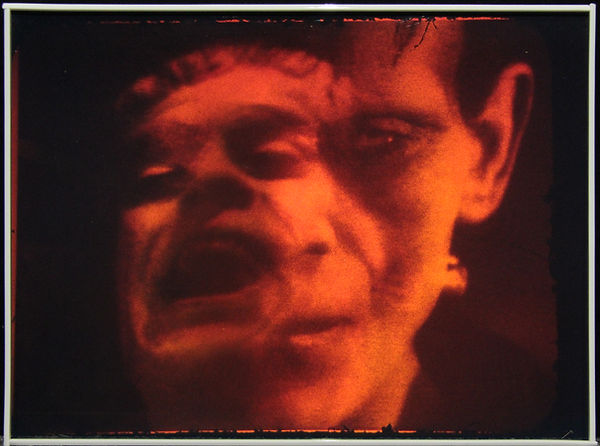
The series was a collaboration developed in the early 1990s between a select group of internationally renowned contemporary artists and holographers who came together to experiment with holography — a technology that could capture true three-dimensionality on a sheet of glass.
The artist list is dazzling: Louise Bourgeois, John Baldessari, Roy Lichtenstein, Ed Ruscha, Chuck Close, James Turrell, and so many others. Each approached the medium differently, bringing their own visual language and pushing the boundaries of what was possible at the time. While the art market for holograms has never been fully developed, museums have started to embrace them. MoMA and the New Museum have both featured holograms in major exhibitions about art and technology, giving the medium fresh visibility.
As part of my appraisal process, I visited the studio of Matthew Schreiber — an artist, the original manager of the C-Project, and one of the foremost experts in the hologram process. Surrounded by these luminous glass plates, Matthew walked me through how each hologram was made, even demonstrating the process of capturing light and form. Hearing his stories about how each artist approached their project added a depth of understanding I could never have gained from paperwork alone.
The donor wanted to give 105 of these works — the largest group of C-Project holograms in existence — to the J. Paul Getty Museum. This would be the Getty’s first acquisition of holograms, making the gift a milestone for their collection.
My role was to provide an IRS-compliant donation appraisal. That meant carefully reviewing documentation for each hologram, confirming attributions, and researching a market where true comparables are rare.
The Getty accepted the gift in full. Now these once-experimental works live in a world-class institution, where they’ll be studied, exhibited, and preserved for generations. For me, the best part was knowing I played a role in the placement of truly groundbreaking body of work into the public realm — exactly where it belongs. Timothy Potts, director of the J. Paul Getty Museum said, “Each work has been created in a unique way that reflects the artist’s engagement with this innovative medium. I have no doubt that they will stimulate new thinking on the history of photography and holography, and especially the recent resurgence of three-dimensional formats for film and television.